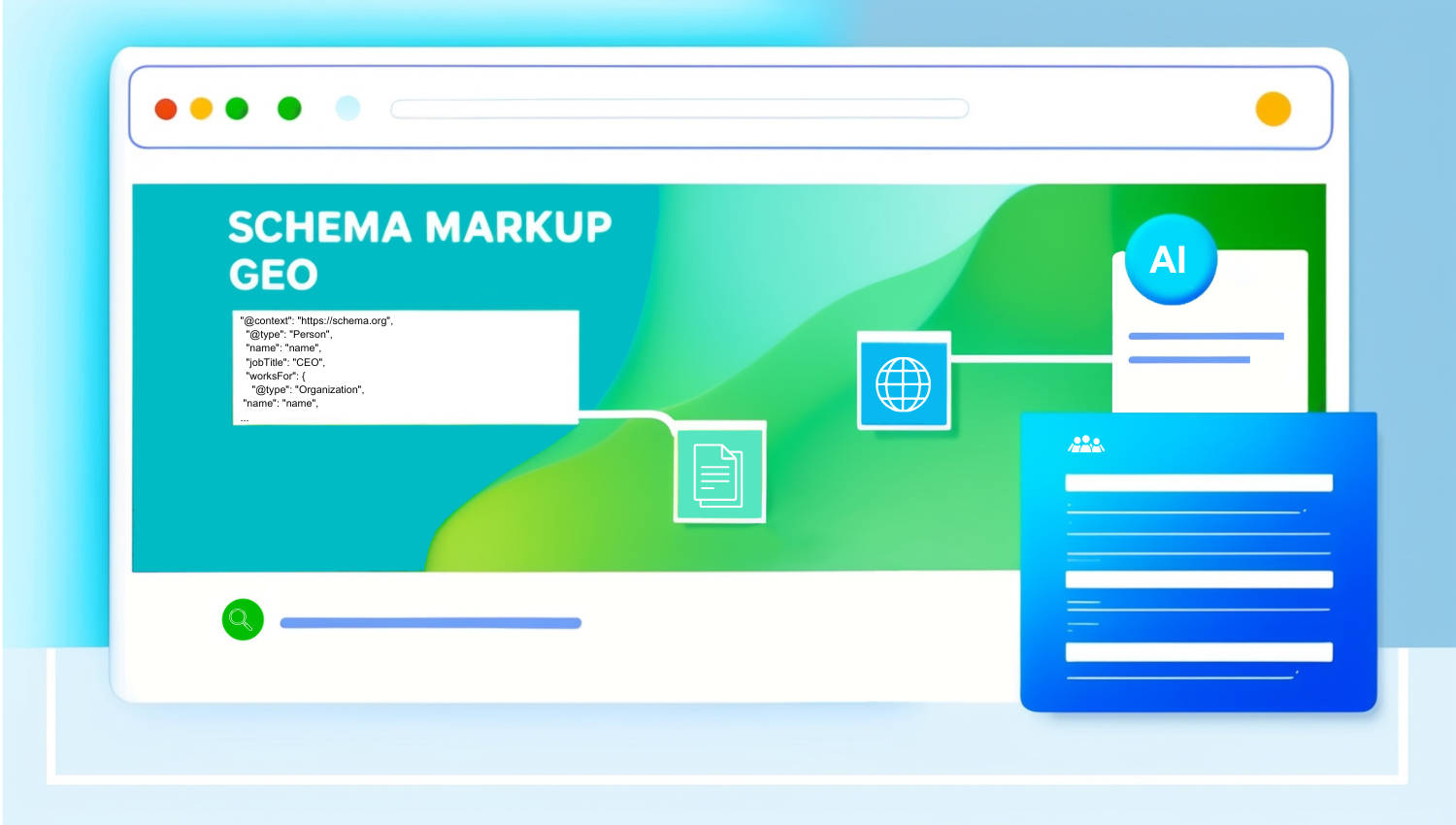
Imagine searching for “Tesla” and instantly seeing results tailored to what you’re looking for – whether it’s the electric car company or the famous inventor. That’s the magic of Generative Engine Optimization (GEO). It focuses on context and relevance, not just keywords, to give you the most accurate results. At the heart of GEO is Entities Schema, a type of structured data that helps search engines understand the meaning behind your content. It identifies and tags key people, places, or concepts on your page, enabling search engines to make connections and deliver precise, context-driven results.
When I first started working with schema markup, I quickly realized how crucial it is to understand entities – what they are and how they connect. My task was to implement schema markup for a SaaS company’s product pages. While I initially assumed the main entity – a software application – would fall under the ‘Product’ schema, I discovered it actually belongs to the ‘CreativeWork’ category, specifically as a ‘SoftwareApplication.’ This realization changed how I approached the markup. I had to include nested schema types like ‘AggregateRating,’ ‘Offer,’ and other properties that gave search engines a clearer understanding of the software’s features and value.
At first, it felt like trying to assemble a puzzle without knowing what the final picture looked like. Through lots of research and trial and error, I began to see how these entities form a web of interconnected information that search engines use to understand content. Once I shifted my perspective from coding to organizing information, everything clicked, and I confidently implemented nested schema.
In this post, I’ll explain why Entities Schema is important for GEO and how it can transform your SEO strategy. With the right implementation, you’ll not only boost your visibility in AI-powered searches but also stand out in a crowded digital landscape.
Table of Contents
What is schema markup?
Schema markup works like a label for your website’s content. It tells search engines exactly what’s on your page – whether it’s a recipe, a product, or an article. This helps search engines understand your content better and display it in more engaging ways, like rich snippets, knowledge panels, or even interactive features in search results.
For example, if your page is about a recipe, schema markup lets search engines know the dish’s name, ingredients, cooking time, and nutritional information. This clarity aligns your content with what users are searching for, boosting its relevance and making it easier to discover.
By using schema markup, you’re essentially speaking the language of search engines. It ensures that your topics, products, or services connect with users’ intent. And in Generative Engine Optimization, where context is key, schema markup becomes a must-have for standing out in search results.
What are entities?
In SEO, entities are more than just words – they’re specific, identifiable things like people, places, brands, or concepts. Think of entities as the “who,” “what,” or “where” of your content that search engines need to understand to deliver accurate results. For example, “Apple” could mean the fruit or the tech company. By recognizing it as an entity, search engines can decide which one you mean based on the context of your content.
Entities are critical for Generative Engine Optimization because they allow AI to connect concepts rather than just match keywords. Instead of treating your page as a random collection of words, search engines recognize the relationships between terms and deliver results that are more accurate and contextually relevant. This is especially useful in AI-driven searches, where users expect precision and tailored responses.
Key examples of entities include:
- People (e.g., Albert Einstein or Beyoncé)
- Places (e.g., New York City, Eiffel Tower)
- Things (e.g., iPhone, Tesla)
- Events (e.g., the Olympics, Super Bowl)
- Concepts (e.g., artificial intelligence, democracy)
By incorporating entities into schema markup, you’re helping search engines understand the context and relationships in your content. For instance, tagging “global warming” alongside “carbon emissions” signals their connection, enabling AI to generate more meaningful responses. This also improves the chances of your content being featured in rich results, knowledge panels, or AI-generated answers.
Overall, entities are not just important; they’re foundational for creating content that aligns with modern search behavior. As GEO evolves, entities help bridge the gap between user queries and the nuanced, accurate results they expect.
How can Entities Schema support GEO?
Entities Schema is like a roadmap for search engines, guiding them to understand your content beyond just keywords. It allows AI to recognize meaningful relationships between topics, making your content more relevant and accurate in search results.
For example, let’s say your content is about “healthy eating.” By tagging phrases like “balanced diet,” “nutrition,” and “whole foods,” Entities Schema helps search engines understand these connections. This makes it easier for search engines to display your page in rich search results.
The benefits don’t stop there. Using Entities Schema:
- Increases your chances of appearing in AI-generated responses, enhancing visibility.
- Helps search engines reduce ambiguity by clearly defining your topics.
- Positions your content as trustworthy, making it more likely to be featured in premium spots like direct answers.
By focusing on entities, you ensure your content stays relevant in AI-driven searches, where context is everything.
Entities schema vs. traditional SEO schema
As search engines evolve, the way we optimize content is changing, too. While traditional schema is useful for predefined data types like products or reviews, it lacks the depth to support AI-driven understanding of context – something Entities Schema excels at.
Key differences between Entities schema and traditional SEO schema
| Aspect | Entities schema | Traditional SEO schema |
|---|---|---|
| Focus | Contextual meaning through entity relationships. | Predefined data types like products, events, etc. |
| Purpose | Helps AI understand content on a deeper level. | Highlights specific, structured information. |
| Effectiveness | Boosts relevance for AI-driven results. | Improves visibility in standard SERPs. |
| Relevance in GEO | Essential for personalized, AI-driven queries. | Limited in handling complex, contextual queries. |
| Implementation | Tags people, places, concepts, and things. | Focuses on fixed attributes for common data. |
| Example | Tagging “global warming” as an environmental concept connected to “carbon emissions.” | Using FAQ schema for common Q&A sections. |
When to use each schema
Both schemas play valuable roles depending on your goals:
- Traditional schema – best for structured data like product reviews, recipes, or event details. For example, an e-commerce site might use review schema to showcase ratings and prices in search results.
- Entities schema – essential for GEO-focused content where deeper understanding and context are key. For example, tagging “carbon footprint” with “renewable energy” signals their relationship, helping AI generate accurate and detailed responses.
Combining the two schemas
Using both schemas together strengthens your SEO efforts by addressing different search needs:
- Use traditional schema to display structured data prominently in SERPs (e.g., star ratings for products).
- Use Entities Schema to enrich context and relationships, ensuring your content performs well in AI-driven results.
For instance, a blog about “sustainable travel” can use FAQ schema to answer common questions while tagging entities like “eco-tourism” and “carbon offsetting” to provide deeper meaning for AI tools.
How to implement Entities Schema (practical guide)
Don’t let the technical side of Entities Schema scare you. Start simple! Follow these steps, and you’ll see results quickly.
1. Identify key entities in your content
Start by analyzing your content to determine which entities (people, places, organizations, or concepts) are most relevant. Focus on:
- Primary topics: What is your content mainly about?
- Supporting concepts: What additional information helps explain the primary topic?
- Niche-specific terms: Are there unique entities that make your content stand out in your industry?
Example: If you’re writing about “Tesla,” specify whether it’s Tesla, the company, or Nikola Tesla, the inventor. This ensures AI generates precise results.
2. Write Entities Schema markup
Use JSON-LD format and schema.org vocabulary to create your Entities Schema markup. This makes it easier for search engines and AI-driven tools to understand your content.
Example code for a person:
This markup identifies Elon Musk as a person, his role as CEO, and his connection to Tesla, helping search engines deliver accurate information.
<script type="application/ld+json">
{
  "@context": "https://schema.org",
  "@type": "Person",
  "name": "Elon Musk",
  "jobTitle": "CEO",
  "worksFor": {
    "@type": "Organization",
    "name": "Tesla"
  }
}
</script>- @context – defines the schema.org framework.
- @type – specifies the type of entity (e.g., “Person”).
- Attributes – include descriptive details like name, job title, and affiliations.
Where to place it? Embed the JSON-LD script in your webpage’s < head > section or at the end of the < body >.
Pro tip: for complex topics, you can combine entities (e.g., linking a product to its manufacturer or an event to its location). This improves AI’s ability to interpret relationships, boosting relevance in search results.
3. Use tools to simplify schema implementation
You don’t have to manually code schema for every page. These tools make the process easier:
- Google’s Structured Data Markup Helper – tag elements on your page to generate schema code.
- Yoast SEO Plugin (for WordPress) – automatically adds schema and allows for customization.
4. Validate your Entities Schema markup
Before publishing, ensure your schema works as intended. Use these tools to validate your implementation:
- Google Rich Results Test – checks eligibility for rich results and identifies errors.
- Google Search Console – monitors how search engines interpret your schema and flags issues.
- Schema Markup Validator (Schema.org) – validates your code to ensure accuracy.
- SEMrush – detects missing or incorrect schema on your website.
5. Monitor and optimize regularly
Schema implementation isn’t a “set it and forget it” task. Keep improving based on performance data. Use tools like Google Search Console and Google Analytics 4 to track:
- Visibility in rich results
- CTR improvements
- Engagement metrics like time on page and bounce rate.
Regular updates ensure your schema adapts to new AI-driven search features and evolving user queries. Add new entities as your content grows, correct flagged errors, and optimize based on emerging trends.
Common pitfalls to avoid
Implementing the Entities Schema can significantly enhance your GEO efforts, but only if done correctly. The table below presents some common mistakes to watch out for and how to avoid them:
| Mistake | Overview | Solution |
|---|---|---|
| Overstuffing entities | Tagging irrelevant entities confuses search engines. | Focus only on entities that align with your core content. |
| Mislabeling entities | Incorrectly tagging similar names (e.g., “Apple” as a fruit instead of a company). | Provide clear context and attributes to distinguish between ambiguous entities. |
| Ignoring validation | Errors in schema prevent search engines from processing it. | Always validate your schema before publishing. |
| Failing to update the schema | Outdated schema leads to discrepancies in search results. | Incorporate schema updates during content revisions. |
| Relying solely on plugins | Plugins generate generic or incomplete markup. | Customize schema to reflect your content’s unique context. |
Case study: Nestlé
Nestlé set out to improve the visibility of its Portuguese website, Saboreia a Vida, while preparing for high-demand periods like the holiday season. They focused on increasing organic traffic, improving user engagement, and optimizing for AI-driven search results.
To achieve this, Nestlé combined targeted content creation with structured data implementation. They identified high-volume keywords like “healthy eating” and “well-being,” tailoring their content to align with user intent and seasonal trends. On their recipe pages, Nestlé applied structured data using Schema.org to highlight key details like:
- Recipe names and ingredients,
- Cooking and preparation times,
- Nutritional information (e.g., calories).
For example, a schema for a “Healthy Quinoa Salad” could include details like preparation time and ingredients, helping search engines feature the recipe prominently in rich results like recipe cards.
{
  "@context": "https://schema.org",
  "@type": "Recipe",
  "name": "Healthy Quinoa Salad",
  "author": {
    "@type": "Person",
    "name": "Nestlé"
  },
  "image": "https://www.example.com/photos/quinoa-salad.jpg",
  "recipeCategory": "Salad",
  "recipeCuisine": "Mediterranean",
  "ingredients": [
    "1 cup quinoa",
    "2 cups water",
    "1 cucumber, diced",
    "1/4 cup red onion, chopped",
    "2 tbsp olive oil",
    "Juice of 1 lemon"
  ],
  "recipeInstructions": [
    "Rinse quinoa thoroughly under cold water.",
    "Cook quinoa in water according to package instructions.",
    "Mix quinoa with cucumber, onion, olive oil, and lemon juice."
  ],
  "cookTime": "PT20M",
  "prepTime": "PT10M",
  "totalTime": "PT30M",
  "nutrition": {
    "@type": "NutritionInformation",
    "calories": "200 calories"
  },
  "sameAs": "https://www.example.com/recipes/healthy-quinoa-salad"
}
This structured data ensures search engines display relevant details – like ingredients and cooking time – in rich search results, making it easier for users to find valuable information quickly.
Results: leveraging GEO benefits
Nestlé’s approach delivered significant results:
- Improved organic visibility – Nestlé’s recipes appeared in rich results, boosting click-through rates.
- Higher user engagement – Users found valuable information directly in search results, increasing time spent on the site.
- Future-ready – With structured data, their content now performs well in AI-powered platforms like ChatGPT.
For example, Nestlé’s recipe for “Cabrito Assado com Castanhas” (Roast Goat with Chestnuts) appeared in AI-generated answers when queried in tools like ChatGPT. This visibility reinforces their brand authority and makes their content a go-to resource for specific topics.
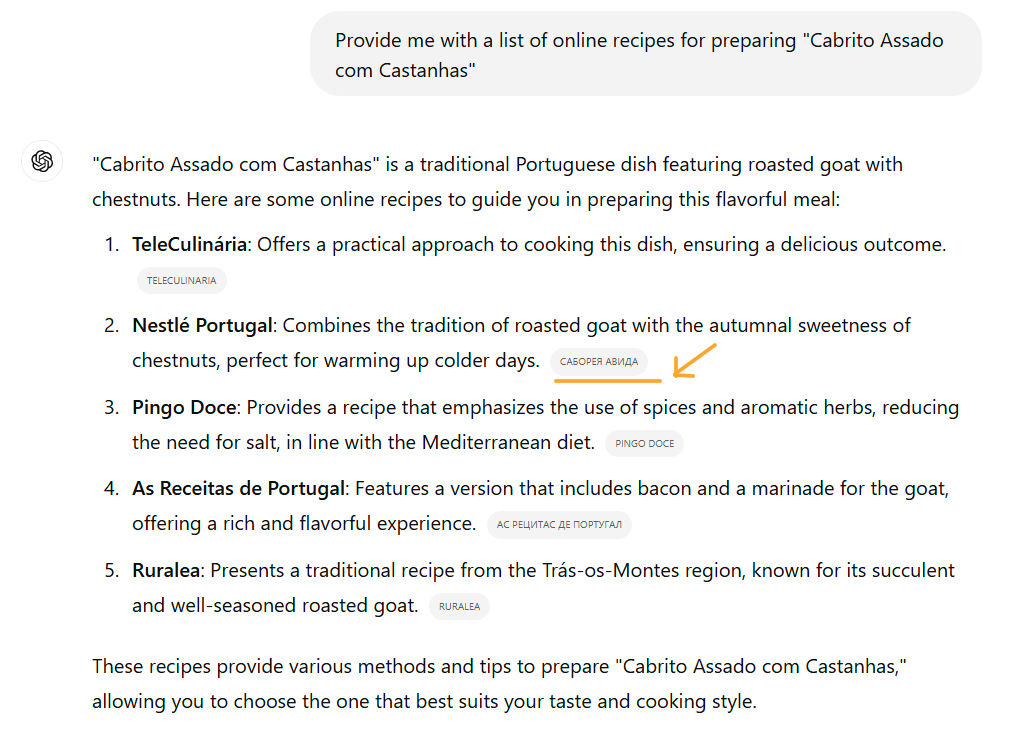
This approach not only elevated their SEO performance but also positioned Nestlé as a leader in AI-driven search optimization. Whether you’re a large brand or a niche site, this strategy shows how structured data and relevant content can transform your online presence.
In conclusion
Entities Schema is a powerful tool for modern SEO, especially in Generative Engine Optimization. It enhances search engines’ understanding of your content, boosting visibility, relevance, and trustworthiness.
Start small by optimizing key pages and validating your schema with tools like Google’s Rich Results Test. Regular updates will keep your content aligned with evolving AI search trends. By adopting Entities Schema, you’ll improve your SEO performance today and future-proof your strategy for AI-driven search.
FAQs
Tagging entities focuses on identifying specific, meaningful items (like a person, place, or concept), while keywords are broader terms. Entities enhance AI understanding by clarifying relationships, whereas keywords alone may not provide enough context for nuanced searches.
Mislabeling entities confuses search engines and reduces content accuracy. Overstuffing entities can dilute relevance. Always tag entities that are central to your content and validate schema to avoid errors.
Entities Schema is particularly impactful in:
– Healthcare for ensuring accuracy in medical content;
– Legal for contextualizing complex legal terms;
– E-commerce for distinguishing between products, brands, and variations;
– Education for connecting topics in niche or technical fields.
Here are examples based on niche types of content:
– Travel blog: tag “Eiffel Tower” as a landmark and “Paris” as a city.
– Fitness blog: tag “HIIT” as a workout type and “calories burned” as a concept.
– E-commerce site: tag “Samsung Galaxy S23” as a product and “smartphone” as a category.
No, you can use tools like Google’s Structured Data Markup Helper, Yoast SEO Plugin, and SEMrush. These tools generate schema code and allow for customization without requiring advanced technical skills.