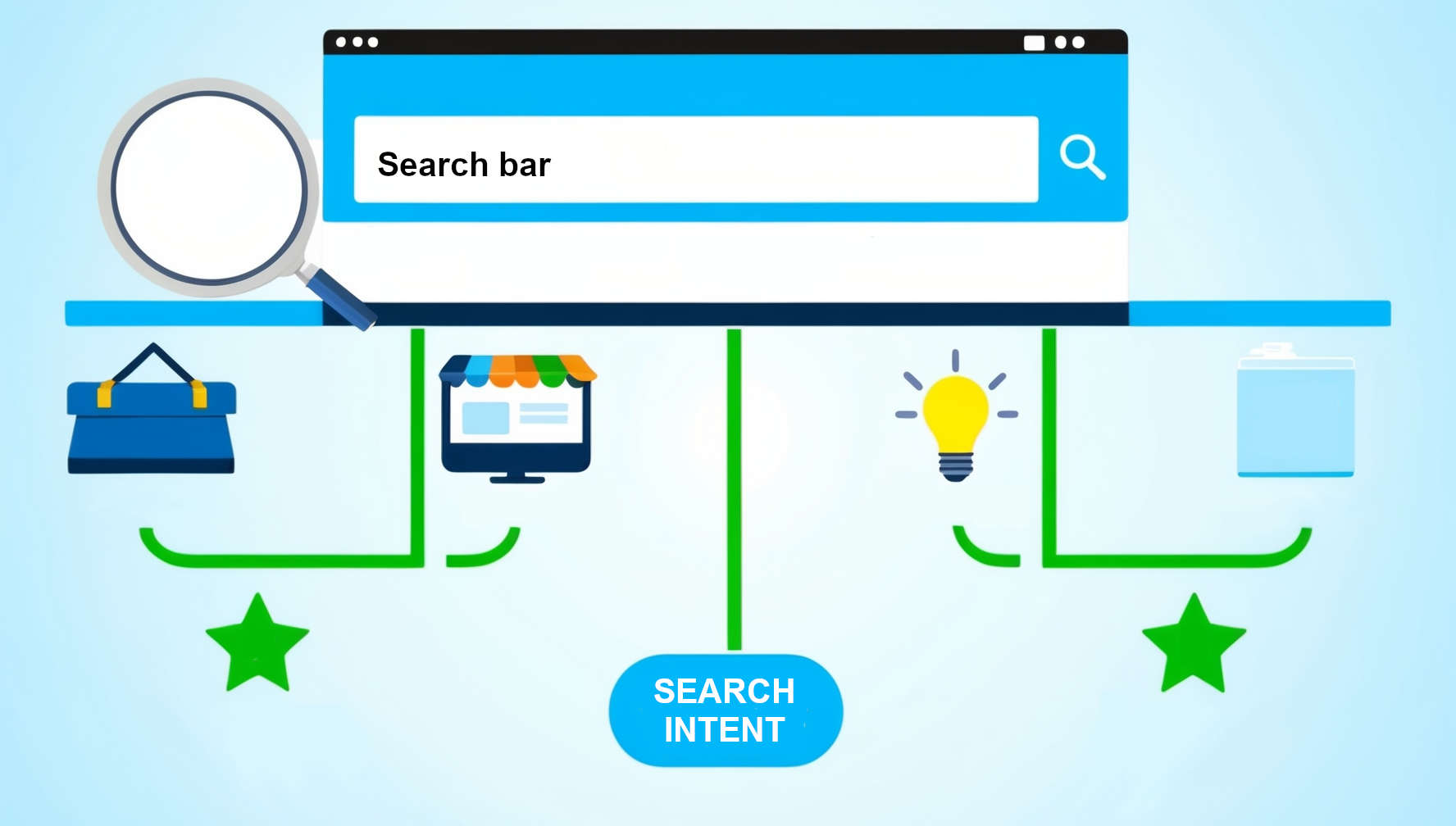
Understanding search intent is key in today’s digital world, allowing you to create content that fits your target audience’s needs and boosts your search engine rankings. When your content matches what users seek, you increase engagement and satisfaction.
In this blog post, I’ll explore the various types of search intent and share best practices for ensuring your content aligns perfectly with user queries.
Table of Contents
What is search intent?
Search intent, also known as user intent or query intent, refers to the underlying purpose or goal behind a user’s search query. It’s not just about the literal meaning of the words typed into a search engine but rather what the user hopes to achieve or find with their search.
Understanding search intent involves grasping the context and motivations behind a query. This insight helps search engines provide more relevant results and allows content creators to tailor their content to meet users’ actual needs.
There are several key aspects of search intent:
- Purpose of the query – This aspect focuses on why users search for information. For example, someone searching for “best running shoes” might be looking to make a purchase. In contrast, someone searching for “how to start running” is likely seeking advice or guidance.
- Type of content desired – Different types of search intents require different kinds of content. For informational queries, users might be looking for blog posts, how-to guides, or tutorials. For transactional queries, they may want product pages, service offerings, or other commercial content.
- User’s stage in the buying journey – Users may be at various stages in their decision-making process. Some might be in the awareness stage, gathering general information. Others might be in the consideration stage, comparing options, or in the decision stage, ready to make a purchase.
Understanding these aspects helps you align your content with what users are truly looking for and enhances their overall search experience.
Types of search intent
Informational intent
Informational intent is when users want answers to questions or extra details about a topic. They’re more interested in learning than in buying or taking immediate action. For example, if someone searches for “How to bake a chocolate cake” or “What is SEO?” they seek detailed explanations or guidance. Similarly, a search for “Best practices for content marketing” shows a desire for in-depth insights.
To meet informational intent, create detailed and informative content. This includes blog posts, how-to guides, tutorials, and FAQs. Make sure your content provides clear and valuable answers. Aim to offer thorough explanations that help users gain the knowledge they’re looking for.
Key terms often found in informational queries include:
- How to – It indicates a desire for instructions or a step-by-step guide, such as “How to make sourdough bread.”
- What is – Users seek definitions or explanations, like “What is blockchain technology?”
- Guide – It implies a comprehensive overview or set of instructions, for example, “Beginner’s guide to gardening.”
- Tips – Users request advice or best practices, such as “Tips for improving public speaking.”
- Best practices – Users look for recommended methods or techniques, like “Best practices for email marketing.”
- Tutorial – The user seeks a detailed lesson or instructional content, for example, “Python programming tutorial for beginners.”
- How does – Users search for explanations on processes or mechanisms, like “How does solar power work?”
- Reasons why – Users need explanations or justifications, such as “Reasons why you should exercise regularly.”
- What are – Users seek lists or information about specific elements, like “What are the benefits of meditation?”
These terms help users find content that provides the answers or information they seek.
Navigational intent
Navigational intent occurs when users are trying to find a specific website or web page. These users usually know exactly what they’re looking for and are directing their search to reach that particular site. For instance, a search like “Facebook login page” means the user wants to go directly to Facebook’s login section. Similarly, a query like “YouTube” indicates the user is aiming to visit the YouTube homepage.
To effectively address navigational intent, make sure your website’s navigation is intuitive and user-friendly. Optimize for brand-related keywords to help users find your site more easily. It’s also important to use clear and descriptive URLs and well-crafted meta tags. These practices increase the chances that users will reach the specific pages they are searching for.
In navigational queries, users are typically looking for specific websites, web pages, or online resources. Common terms in these queries often include:
- Brand names – Used to locate the official website or pages related to a particular company or service, such as “Amazon,” “Nike,” or “Microsoft.”
- Site-specific keywords – Indicate the user is looking for a particular part of a website, such as “Facebook login page” or “YouTube trending.”
- Company or product names – Used to find official pages or product information, like “Apple official site” or “Samsung Galaxy S21.”
- Service names – Include names of online services or tools, such as “Gmail login” or “Dropbox file sharing.”
- Descriptive keywords with brand names – Users combine a brand name with a descriptive term to find specific content, for example, “Nike store locator” or “Tesla Model 3 specs.”
These terms help users navigate directly to the websites or specific pages they are looking for, reflecting their intent to access familiar and often branded content.
Transactional intent
Transactional intent happens when users want to make a purchase or complete a specific action, such as subscribing to a service. These users have a clear goal, whether it’s buying a product, finding the best deal, or signing up for something. For instance, a search for “buy running shoes online” indicates the user is ready to purchase athletic footwear. Similarly, a query like “best price for iPhone 14” shows they are comparing prices for the best deal. Searching for “subscribe to SEO newsletter” means the user wants to sign up for an SEO-related newsletter.
To address transactional intent effectively, optimize your product pages with clear and compelling information. Use prominent calls-to-actions that guide users toward completing their desired action. Create attractive offers and promotions to encourage conversions. Also, ensure that your checkout process is smooth and user-friendly to minimize any obstacles that might prevent users from completing their transactions. By focusing on these areas, you can better meet users’ needs with transactional intent and increase your chances of successful conversions.
Key terms typically included in transactional queries are:
- Buy – It indicates a desire to purchase a product or service, such as “buy running shoes” or “buy laptop online.”
- Purchase – Similar to “buy,” this term suggests an intent to acquire something, for example, “purchase office furniture.”
- Order – It implies placing an order for a product or service, such as “order custom t-shirts” or “order food delivery.”
- Discount – It indicates a search for deals or lower prices, like “discount code for shoes” or “best discount on electronics.”
- Deal – It refers to special offers or bargains, for example, “hot deals on travel” or “best deal on a smartphone.”
- Price – Related to finding cost information, such as “price for iPhone 14” or “compare prices on TV.”
- Subscribe – It suggests signing up for a service or subscription, such as “subscribe to magazine” or “subscribe to newsletter.”
- Sign up – It indicates a desire to register or join, for instance, “sign up for gym membership” or “sign up for online course.”
- Book – Used when looking to make reservations or appointments, like “book hotel room” or “book a flight.”
These terms help identify queries where users are ready to take action, such as making a purchase, finding a deal, or subscribing to a service.
Commercial intent
Commercial (investigation) intent occurs when users seek products or services with the clear intent to make a purchase decision soon. At this stage, they compare options, seek detailed reviews, and gather information to choose the best option. For instance, a search like “best smartphones 2024” shows that the user is comparing the latest models before buying. Similarly, “top SEO tools” indicates they are evaluating different tools to enhance their website’s search engine performance. A search for “customer reviews for XYZ brand” means they are looking for feedback to inform their decision.
To effectively address commercial intent, focus on creating comparison articles that highlight the strengths and weaknesses of various products or services. Detailed reviews can offer in-depth analysis and personal experiences, helping users understand the value and performance of different options. Additionally, include buying guides that outline key features, benefits, and practical advice to assist users in making informed choices. Featuring customer testimonials and feedback can also add credibility and help potential buyers make decisions based on others’ experiences.
Key terms commonly found in these queries include:
- Best – Used to find top-rated or highly recommended options, such as “best laptops for gaming” or “best credit cards for travel.”
- Top – It indicates a search for leading or highest-quality choices, like “top smartphones of 2024” or “top streaming services.”
- Comparison – Users seek to compare different products or services, for example, “laptop comparison” or “insurance policy comparison.”
- Reviews – It refers to user opinions and evaluations, such as “product reviews for XYZ brand” or “customer reviews of ABC service.”
- Rating – Users search for ratings or scores given to products or services, like “best-rated vacuum cleaners” or “highly rated online courses.”
- Guide – It indicates a request for comprehensive information or advice, such as “buying guide for home appliances” or “SEO tools guide.”
- Features – Users look for detailed information on specific attributes, like “features of the latest smartphones” or “key features of project management software.”
- Pros and cons – The user seeks a balanced view of the advantages and disadvantages, such as “pros and cons of electric cars” or “pros and cons of subscription boxes.”
- Best value – Searches for products or services offering good quality at a reasonable price, like “best value for money headphones” or “best value rental cars.”
These terms help users gather detailed information and evaluations to make well-informed purchasing decisions.
How to determine user search intent
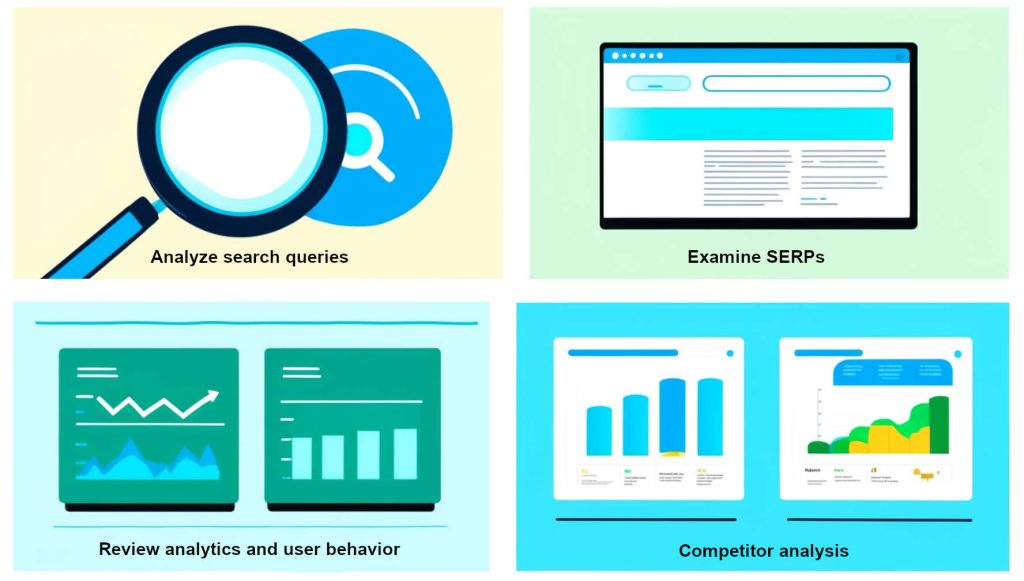
Understanding user intent is essential for optimizing your content and improving search engine performance. To gain deeper insights into user intent, follow these steps:
- Analyze search queries – Look at the keywords and phrases people use in their searches. Search queries often reveal intent. For example, “best practices” usually indicates informational intent, while “buy now” points to transactional intent.
- Examine SERPs features – Check the types of results that appear for specific queries. If you see mostly how-to articles, it reflects informational intent. If the results are product pages or ads, it suggests transactional intent.
- Review analytics and user behavior – Use tools like Google Analytics 4 to see what content your visitors engage with. Metrics like bounce rate, time on page, and conversion rates can give you clues about their intent.
- Competitor analysis – Analyze how your competitors address similar search queries. Observe the types of content they produce and how they meet user needs.
Why understanding search intent is important
Understanding search intent is important for several reasons. First, when you tailor your content to match user intent, it will become more relevant and valuable to your audience. Users are more likely to engage with, share, and return to content that directly addresses their needs and queries. This relevance helps build your authority and expertise in your field.
Additionally, search engines try to provide users with the most relevant results. Aligning your content with search intent improves your chances of ranking higher in SERP. Search engines usually prioritize content that best answers a user’s query. So, when your content matches what users are searching for, it enhances your visibility and increases organic traffic.
Moreover, providing content that meets user needs leads to a better user experience. When users quickly find the information or products they want, they are more likely to stay on your site longer, explore other content, and convert. This positive experience boosts engagement, reduces bounce rates, and improves overall site performance. A great user experience encourages repeat visits and fosters loyalty, which is key to long-term success.
By understanding and leveraging search intent, you can develop a more effective content strategy that benefits your users and your search engine rankings.
Best practices for aligning content with search intent
To effectively align your content with user search intent, follow these best practices to ensure relevance and value:
- Keyword research – Perform thorough keyword research to uncover the intent behind queries related to your topic. Tools like Google Keyword Planner (GKP), SEMrush, and Ahrefs can help you identify keywords associated with informational, navigational, transactional, or commercial intents.
- Content mapping – Plan your content to cover different types of search intent. Create how-to guides and informational articles for informational queries, product pages and reviews for transactional intent, and comparison posts for commercial intent. This structured approach ensures a comprehensive content strategy that addresses all user journey stages.
- Optimize on-page elements – Incorporate relevant keywords in title tags, headers, meta descriptions, and throughout your content. Well-optimized on-page elements improve SEO and make it clear to users that your content meets their needs. Ensure that titles and headers are descriptive and aligned with search intent to capture user attention quickly.
- Create quality content – Offer well-researched, engaging, and comprehensive content. High-quality content that thoroughly answers questions, solves problems, or meets user needs will naturally align with search intent. Invest time in creating informative, engaging, and easy-to-read content to enhance user satisfaction and retention.
By understanding and addressing user search intent, you create content that better serves your audience, meets their needs, and performs better in search engine results. This strategic approach ensures your content aligns with what users are looking for, leading to increased engagement, higher rankings, and improved search engine performance.
In conclusion
By understanding and addressing user search intent, you can create content that better serves your target audience, meets their needs, and ultimately performs better in search engine results. From conducting thorough keyword research and mapping out content to optimizing on-page elements and creating high-quality content, aligning your content with search intent ensures relevance and value for your audience. This strategic approach leads to increased engagement, higher rankings, and a better overall user experience.